
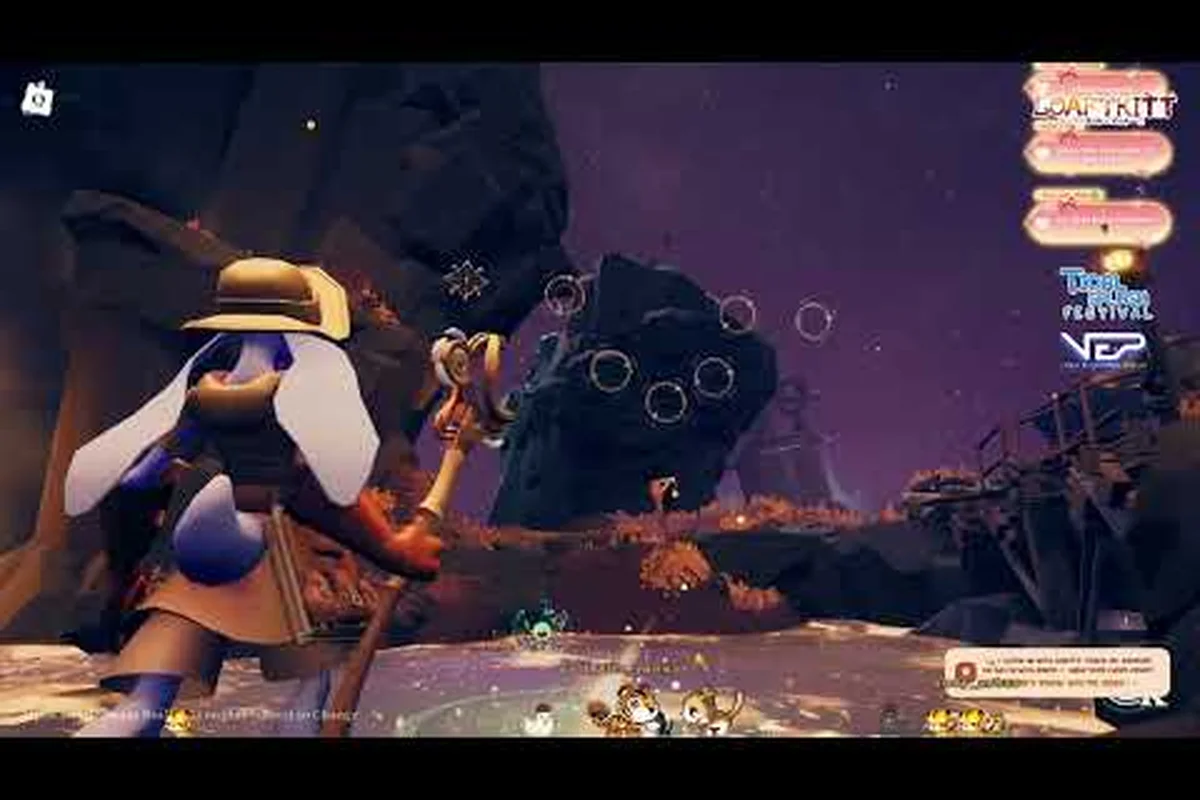
Sailing between pollution-damaged islands in Island Restoration is the connective tissue of the entire game, and your boat is the hub where almost every system intersects. Understanding Island Restoration how to get boat parts — and knowing which parts actually change how the boat sails versus which are purely cosmetic — saves hours of confusion for new captains. This guide breaks down the boat's functional role, where parts come from, how recycling and storage interact, and which upgrade paths are worth chasing before you chase the wrong ones. According to the official Steam listing, the September 23, 2026 launch ships with a full skill tree, a built-in randomizer for endless replay, and boat customization layered on top of the core cleaning loop, so the parts system is a real progression layer rather than window dressing.
How the Boat Actually Functions in Island Restoration
The boat in Island Restoration is more than a loading screen prop — it is your mobile base of operations. You sail from one polluted island to the next, dock at the pier, and deploy your six cleaning tools (Grabber, Power Washer, Shovel, and three more) to clear oil, garbage, vines, and mud. Between trips, the boat serves as a storage anchor where collected materials and side-contract rewards are stashed, and where you can swap cosmetic parts to change the vessel's appearance.
The Boat's Role in the Cleaning Loop
Every map you visit requires you to start on the boat, sail in, and dock. The boat doesn't have a stamina bar, fuel system, or wind mechanic that players need to manage in real time — the sailing phase is essentially a short transition that lets you see the next biome and pick your approach. According to community testing on the demo build, the journey between islands is fully automated; you tap to set sail and arrive after a brief cinematic. The skill tree and upgrade points affect what you can do once you dock, not how fast the boat moves between maps.
Boat Storage and Inventory Staging
Storage is where the boat's practical value becomes obvious. Cleaning a beach yields materials that don't fit neatly in your personal inventory, so the boat's hold acts as overflow. Players in the official Discord have reported that prioritizing boat storage upgrades early lets them run longer contracts without returning to a vendor, because the upgrade raises the carry cap before the next biome's heavier debris hits their limit.
Where Boat Parts Come From: Sourcing and Acquisition
Boat parts in Island Restoration fall into two broad buckets: cosmetic parts that change the boat's appearance, and functional upgrades that change what the boat can hold or how it interacts with systems like side contracts and the skill tree. Both buckets have distinct acquisition paths, and confusing them is the most common mistake new players make.
Cosmetic vs. Functional: A Practical Breakdown
Cosmetic parts are visual only. They include hull paint, sail patterns, figureheads, lanterns, and trim accents. Functional upgrades change the boat's storage capacity, recycling output, or contract rewards. The game's official feature list confirms that boat customization is presented as cosmetics, while the skill tree handles gameplay-affecting upgrades. That distinction matters because spending hours farming the wrong tier of part leaves the actual progression layer untouched.
| Part Type | What It Changes | Primary Source | Time to Acquire |
|---|---|---|---|
| Cosmetic Hull Paint | Visual hull color | Recycling vendor, side-contract rewards | Short (1–2 hours) |
| Cosmetic Sail Pattern | Visual sail design | Cleaning milestones, demo unlocks | Medium (3–5 hours) |
| Storage Upgrade | Carry capacity on boat | Skill tree, upgrade points | Medium (tied to skill tree) |
| Recycling Output | Material yield from recycling | Skill tree, skill tree bonuses | Late (full skill tree) |
| Figurehead | Visual front decoration | Cleaning achievements, demo rewards | Short to medium |
| Lantern | Visual side decoration | Side-contract completions | Short |
Acquisition Channels at a Glance
Three channels feed the boat parts pipeline, and each one tends to favor a different part category.
| Source | What It Drops | Frequency | Notes |
|---|---|---|---|
| Cleaning Milestones | Cosmetic parts, rare functional unlocks | Per map, per biome | Triggered by clearing % thresholds on each island |
| Side Contracts | Cosmetic accents, occasional storage tokens | Per contract, infinite pool | Side contracts are endless thanks to the built-in randomizer |
| Recycling Vendor | Hull paint, sail patterns, trim | On-demand via recycled materials | The vendor accepts materials cleared from pollution |
Boat Recycling: Turning Pollution Into Parts
The recycling system is the most direct answer to the question of how parts move from "loot" to "equipped cosmetic." When you clean oil, garbage, vines, or mud off an island, the recovered materials aren't just clutter — they're inputs that the recycling vendor converts into boat parts and consumables.
The Recycling Workflow Step by Step
The workflow is straightforward once you know it, but the demo build originally hid it behind an icon that confused players until the developer added clearer icons after community feedback.
-
Clean an island using your tools until debris bags, oil slicks, vines, or mud piles are gone.
-
Walk over the cleaned debris — each piece adds to your carried material count.
-
Return to the boat and access the storage hold, then walk to the recycling vendor docked at any pier.
-
Trade materials for boat parts: hull paint, sail patterns, lanterns, figureheads, and trim accents rotate through the vendor's stock.
-
Equip purchased parts from the boat customization menu; cosmetics apply instantly without a loading screen.
What Recycling Can and Cannot Do
Recycling exchanges materials for cosmetics, but it doesn't grant functional upgrades like storage capacity or sailing speed. Functional upgrades live in the skill tree and require upgrade points earned by completing maps and side contracts. Players in the Discord have confirmed that the recycling vendor never sells storage upgrades — if you want more carry capacity, you need to push the skill tree branch that boosts boat storage rather than grinding the vendor.
| Recycling Output | Functional or Cosmetic | Material Cost (Relative) |
|---|---|---|
| Hull Paint Swatch | Cosmetic | Low |
| Sail Pattern Variant | Cosmetic | Medium |
| Lantern Decoration | Cosmetic | Low |
| Figurehead Sculpture | Cosmetic | Medium to High |
| Trim Accent Set | Cosmetic | Low |
| Storage Token | Functional (rare drop) | High |
Boat Storage Upgrades and Why They Matter Early
If you only chase one boat-related progression track early, make it storage. The boat acts as your overflow container, and a higher cap means longer uninterrupted cleaning sessions between vendor visits. The skill tree is where this upgrade lives, which is why the boat's functional upgrades are best understood as skill tree branches rather than "boat parts" in the traditional sense.
Storage Capacity Across the Skill Tree
The skill tree splits into multiple branches, and the storage branch is the one most directly tied to the boat. According to the official feature list, the full game ships with a complete skill tree that players can navigate freely, so the exact layout of the storage branch is up to the player — but the effect of investing points there is consistent: more room for materials, fewer trips to the vendor, and more time spent on the beach with the Power Washer.
| Skill Tree Tier | Storage Effect | Approximate Point Cost | Recommended For |
|---|---|---|---|
| Tier 1 | +25% carry cap | 1 point | Every player, immediately |
| Tier 2 | +50% carry cap | 2 points | Players running long contracts |
| Tier 3 | +75% carry cap | 3 points | Late-game biome clears |
| Tier 4 | +100% carry cap | 4 points | 100% completion runs |
Why "Does the Boat Matter?" Has a Simple Answer
A common question in the community is whether the boat actually matters beyond cosmetics. The honest answer is: it matters for inventory flow, not for sailing performance. The boat doesn't get faster or slower based on parts, and there is no fuel or wind system to optimize. What changes is how much you can carry between cleanings, how often you visit the vendor, and how your vessel looks while doing it. The cosmetic side is also where personalization lives, and players who want their boat to feel like their own can spend dozens of hours tweaking paint, sails, and figureheads without ever touching the skill tree.
Sail Guide: Cosmetic Sails, Variants, and What They Actually Do
Sails are the boat part most players fixate on first because they're the most visible piece of the vessel, and because they have the widest variety of variants. This section functions as a sail guide for new captains who want to know what they're chasing and why.
Sail Variants and How to Unlock Them
Sail patterns come from three sources: cleaning milestones on individual islands, side-contract rewards from the endless contract pool, and the recycling vendor. Each source tends to drop a different style range, which means mixing sources is the fastest way to assemble a varied collection. According to the official release announcement, the full launch ships with 4 biomes across 12 distinct maps plus a built-in randomizer, which means no two sail-farming runs look the same.
| Sail Style | Best Source | Visual Identity | Unlock Speed |
|---|---|---|---|
| Tropical Print | Tropical Isles biome milestones | Bright, palm-themed | Fast (first biome) |
| Industrial Stripe | Side-contract rewards | Weathered, functional look | Medium |
| Polished White | Recycling vendor | Clean, minimalist | Medium |
| Custom Painted | Cleaning 100% thresholds | Hand-painted accents | Slow (per-map 100%) |
| Event Variant | Demo bonus / launch rewards | Limited-edition patterns | One-time only |
Combining Sails with the Rest of the Boat
A sail is only one of five independent visual slots, and pairing a striking sail with mismatched hull paint or a plain figurehead is the most common visual mistake the community has flagged. The mix-and-match system rewards players who treat the boat as a coordinated set rather than a single piece. Holding off on equipping new parts until you have two or three matching slots gives a cleaner result than equipping every new drop as soon as it lands.
Building a Practical Boat Progression Plan
Putting the pieces together, a sensible progression plan for new captains looks like a short checklist that mixes cosmetic unlocks with functional upgrades in the right order. Players who follow this sequence avoid the common trap of grinding cosmetics for hours while their carry cap remains stuck at the starter level.
-
Push the first storage upgrade immediately — the Tier 1 storage boost is the single highest-value boat upgrade in the early game.
-
Clear the first biome to 100% on at least one map — this triggers the first batch of cosmetic unlocks including a sail pattern and figurehead.
-
Visit the recycling vendor after every 2–3 maps — spending recycled materials on hull paint and lanterns fills out the visual slots quickly.
-
Run 3–5 side contracts before each vendor visit — contracts reward trim accents and occasional sail variants that complement the milestone drops.
-
Save the next storage point for the second biome — heavier debris in the second biome makes the Tier 2 carry boost feel like a genuine quality-of-life improvement.
-
Mix-and-match only after you have at least 3 matching parts — this avoids the mismatched look that haunts the first week of customization.
-
Save event-variant sails for a coordinated build — limited sails look best when paired with matching limited figureheads or lanterns.
Common Mistakes to Skip
-
Treating the boat as a single cosmetic slot rather than five independent slots.
-
Grinding the recycling vendor for functional upgrades that don't exist there.
-
Ignoring the skill tree's storage branch because the word "boat" doesn't appear in its name.
-
Equipping every new part the moment it drops, which fragments the visual set.
-
Confusing the demo's unlock list with the full launch list — the demo covers only the Tropical Isles.
Boat Parts and the Wider Game Loop
Boat parts connect to the broader Island Restoration loop in a way that's easy to miss during the first few hours. Cleaning feeds recycling, recycling feeds cosmetics, cosmetics feed the visual identity of the boat, and the boat's storage capacity feeds how long you can clean before returning to a vendor. It's a closed loop that the developer deliberately designed to reward consistent play rather than burst sessions. smetics feed the visual identity of the boat, and the boat's storage capacity feeds how long you can clean before returning to a vendor. It's a closed loop that the developer deliberately designed to reward consistent play rather than burst sessions, and if you want to see how that loop plays out at its ceiling, our walkthrough on Island Restoration How To Get 100 Percent maps every cosmetic, storage, and vendor milestone onto the steady, long-session routine the system was built around.
How the Loop Reinforces Itself
Each leg of the loop reinforces the next. A clean island yields materials, materials become boat parts at the vendor, and the boat's growing customization makes the sailing phase feel more personal. Meanwhile, the skill tree's storage upgrades let players carry more materials per trip, which means fewer vendor visits and more cleaning time. Players who understand this loop early tend to clear biomes faster because they aren't constantly returning to base.
What the Full Launch Adds on Top of the Demo
The demo covers the first biome (Tropical Isles) only, but the September 23 launch expands to 4 biomes across 12 maps, adds a built-in randomizer for endless map variety, and includes infinite side contracts. That means the boat parts pool grows substantially between demo and launch, and any parts unlocked in the demo are likely to carry over with the cosmetic identity intact. Players who invested time in the demo's boat customization should find their visual identity preserved when the full game ships, with new slots and variants available on top.
Frequently Asked Questions
Does the boat actually matter in Island Restoration, or is it just cosmetic?
The boat matters for inventory flow but not for sailing speed. There is no fuel or wind system — sailing is an automatic transition between maps. What the boat does control is storage capacity, which is upgraded through the skill tree, and cosmetic appearance, which is upgraded through the recycling vendor and side-contract rewards. If you only invest in one boat-related upgrade early, make it the Tier 1 storage boost.
Where do you get boat parts in Island Restoration?
Boat parts come from three main sources: cleaning milestones on each island, side-contract rewards from the endless contract pool, and the recycling vendor who accepts pollution materials as currency. Functional upgrades like storage capacity come from the skill tree and are not sold by the recycling vendor. Cosmetic parts are split across all three sources, with each source favoring a different style range.
Can you recycle boat parts back into materials?
The recycling vendor accepts pollution materials and exchanges them for boat parts, but the reverse path — recycling equipped boat parts back into materials — is not a standard loop. Once a cosmetic part is equipped, it stays on the boat until you manually swap it for another. Players who want flexibility should hold off on equipping limited-edition parts until they're committed to a build.
How do you get more boat storage in Island Restoration?
Boat storage upgrades live in the skill tree, not in the part system. You earn upgrade points by completing maps, clearing pollution thresholds, and finishing side contracts, then spend those points in the storage branch of the skill tree. Each tier raises the carry cap by roughly 25%, and the full branch tops out at around +100% capacity. The first point is the highest-value investment for new players.
What's the fastest way to unlock new sail patterns?
Mix all three sources: clean maps to 100% for milestone sails, run side contracts for accent patterns, and visit the recycling vendor after every few cleanings for vendor-exclusive variants. Saving event-variant sails for a coordinated build rather than equipping them immediately is the fastest way to assemble a complete visual set. The built-in randomizer ensures no two farming runs look the same, so variety is built into the system.