
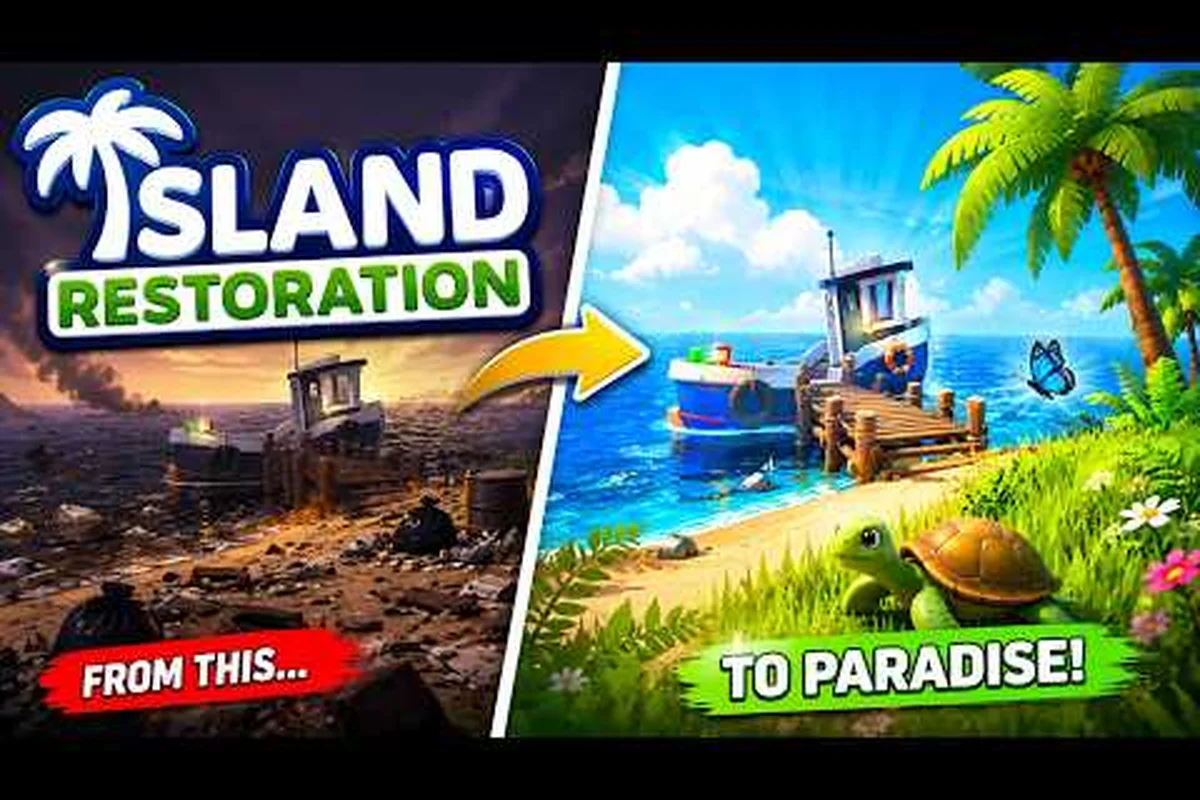
The promise of Island Restoration infinite contracts is simple: every time you accept a side job, a brand-new island spawns for that specific contract, so the cleanup grind never settles into a memorized loop. The official Steam page for Island Restoration confirms the launch version ships with this contract generation built in, and community data from the demo build shows the same logic carries over to full release. The mechanic matters because it turns a cozy cleaning sim into a long-tail hobby where the job board keeps feeding you fresh layouts, pollution profiles, and animal rescues well after the twelve hand-crafted maps have been fully restored.
What Infinite Contracts Actually Mean in Island Restoration
Infinite contracts are not a separate game mode — they are the always-on side contract system that ties directly into Island Restoration's randomizer. Every time a contract appears on the job board, the randomizer generates a new island layout, picks a pollution profile, and assigns a difficulty tier with a matching reward. You accept the job, sail to the generated location, and clean until the contract objective is met.
The mechanic is different from a roguelike permadeath structure because your boat, skill tree, and unlocks persist between contracts. You are not losing progress when a new island spawns; you are simply working on a different tile of the same persistent world. Community testers report that the randomizer pulls from the four biomes and the twelve hand-designed maps as a base vocabulary, then rearranges the pollution placement, animal spawns, and tool demands so that no two contracts feel identical.
| Contract Element | Hand-Crafted Maps | Infinite Contract Islands |
|---|---|---|
| Layout | Fixed | Generated by randomizer |
| Pollution placement | Designer-tuned | Procedurally arranged |
| Animal spawns | Scripted per map | Rolled per contract |
| Reward tier | Fixed payout | Scales with difficulty |
| Replay value | One full clear | Unlimited fresh runs |
How the Randomizer Pulls From the Four Biomes
Island Restoration ships with 4 biomes across 12 maps at launch. According to the official release post, the randomizer treats those twelve maps as templates, then layers a generation pass on top that shifts vegetation density, oil spill clusters, vine coverage, mud patches, and trash density. The biome identity stays intact — a generated Tropical Isles contract will still feel tropical, just with a new coastline and a new animal roster to discover.
Players testing the demo build noticed that the Tropical Isles templates tend to favor lighter pollution and more animal encounters, which makes them the best contracts to learn the randomizer's logic. Once you have run a dozen generated Tropical contracts, the same generation rules start showing up inside the Ruined, Paradise, and Endless biome templates, which is where the harder oil-spill contracts and bigger payouts live.
Why the Game Calls It "Infinite" Instead of "Random"
The word infinite is doing specific work here. It is not marketing language for a high number of maps — it is a literal statement that the randomizer has no fixed pool of contract islands. The generation pass runs every time you accept a job, and because the randomizer can mix pollution types, tool demands, animal spawns, and island size, the effective variety is mathematically larger than any player will exhaust in a single playthrough. The official Steam page frames this as endless replayability because the contract generation layer sits on top of the curated twelve-map base.
The phrase "infinite contracts" refers to an endless stream of restoration jobs, each continuing to roll in without a hard cap, which keeps the island rebuilding loop running indefinitely as confirmed by the developer's listing on the Island Restoration Steam store page.
The Contract Generation Pipeline Step by Step
Understanding how a contract is built makes the randomizer feel less like a black box and more like a system you can play with. Every contract goes through the same five-stage pipeline, and each stage is exposed to the player in some form — from the job board preview to the loading screen, to the pollution types on the island itself.
| Stage | What Happens | Player-Visible Clue |
|---|---|---|
| 1. Template Pick | Randomizer selects a base map from the 12-map pool | Biome icon on job card |
| 2. Pollution Roll | Oil, mud, vines, trash, soap-needed spots are placed | Pollution density preview |
| 3. Animal Spawn | Wildlife is rolled onto the generated island | Species hint if any |
| 4. Difficulty Tier | Easy, Medium, or Hard multiplier is assigned | Star count on contract |
| 5. Reward Calc | Payout is computed from tier, size, and biome | Coin reward on job card |
Stage 1: Template Selection From the Twelve-Map Pool
The randomizer cannot invent a biome from scratch — it pulls from the four confirmed biomes (Tropical Isles, Ruined Islands, Paradise Islands, Endless Islands) and the twelve hand-designed maps that ship with the full game. This is why generated contracts still feel like they belong to Island Restoration instead of random noise: the randomizer inherits the visual identity, vegetation palette, and animal roster of the source template, then layers variation on top. The Endless Islands biome, in particular, is designed to be the high-variation bucket where the randomizer runs hottest.
Stage 2 and 3: Pollution and Animal Generation
Once a template is picked, the randomizer rolls a pollution profile that decides how many oil spills, mud patches, vine clusters, and trash piles will be placed, and where. A contract tagged "Hard" might roll three oil spills plus heavy vine coverage, while an "Easy" roll could be mostly trash with a single mud patch. Animal spawns are rolled separately, so a generated island can ship with 0 to 6+ wild animals depending on biome and difficulty. Players who want to maximize animal encounters should look for the quick jobs guide because smaller island contracts tend to roll smaller animal counts.
Stages 4 and 5: Difficulty and Reward Calculation
The difficulty tier is the multiplier that drives the payout. A Hard contract in the Paradise biome pays noticeably more than an Easy contract in the Tropical Isles, and the biome reward modifier stacks on top of that. According to the Steam store description, the reward curve is built so that chasing harder contracts is the fastest way to bank coins for skill tree upgrades and boat cosmetics, which is the core economic loop behind Island Restoration's endless replayability.
Why the Loop Never Runs Dry
A cleaning simulator with twelve maps could technically be cleared in fifteen to twenty hours. The infinite contract layer extends that by an order of magnitude because every new contract is a fresh puzzle, not a re-run of a map you have already three-starred. Community testers report that the randomizer's effective variety far exceeds the visible map count, because each generated island recombines pollution placement, animal spawns, tool requirements, and reward tiers in ways that produce meaningfully different cleanup routes.
The loop is also self-reinforcing because of the skill tree. As you unlock better tool upgrades and efficiency nodes, you start accepting harder contracts that pay more, which lets you unlock more upgrades, which lets you clear the next tier faster. The contract system feeds this cycle by always offering a Hard contract you cannot quite clear yet — the next skill point you spend is the one that lets you finish it, and the coin reward retroactively justified the upgrade.
| Player Phase | Contract Behavior | Replay Driver |
|---|---|---|
| Early game (0-10 skill points) | Easy Tropical contracts dominate | Learning tool rotation |
| Mid game (10-25 skill points) | Medium Paradise contracts unlock | Chasing animal species |
| Late game (25+ skill points) | Hard Endless contracts open up | Maxing payout per run |
| Endgame | Random biome mix on every job | Personal best times |
Comparison With Fixed-Map Cleaning Sims
Most cozy cleaning games give you a finite set of maps and call it done. Island Restoration's pitch is different because the curated twelve-map campaign acts as a tutorial for the randomizer, not as the entire game. Once you have cleared the campaign and started chasing three-star scores on every biome, the infinite side contracts take over and become the actual long-term content. This is why the Steam page highlights both the curated biomes and the contract generation in the same feature list — they are two halves of the same design.
How Skill Tree Synergy Keeps the Loop Fresh
The skill tree introduces new tool behaviors, water tank capacity, and efficiency multipliers that change how you approach a generated island. A player who has unlocked the soap efficiency node will tackle a mud-heavy generated contract very differently from a player who prioritized oil spill damage. The same generated island feels like a different puzzle depending on which upgrades you have, which is a second source of variety on top of the randomizer itself. If you are still mapping out your first fifteen points, the contract guide covers which upgrades actually move the needle for infinite contract income.
Practical Tips for Farming Infinite Contracts
The infinite contract loop is generous, but it rewards a few specific habits. The fastest coin-per-hour routes are not the same as the fastest three-star routes on the curated campaign maps, so it is worth treating the contract grind as its own optimization problem.
| Tip | Why It Works |
|---|---|
| Stack Hard Paradise contracts | Highest biome payout modifier |
| Save soap for mud patches | Soap is the rarest consumable |
| Finish animal rescues first | Morale bonus stacks with payout |
| Avoid contracts with 3+ oil spills early | Power Washer not yet specced |
| Always check the star count | 3-star contracts pay 2x base |
Pick Contracts That Match Your Current Skill Tree
The job board does not hide the difficulty, and accepting a Hard contract without the right upgrades is the most common way players burn time on the wrong run. A good rule of thumb is to clear every Easy and Medium contract in a biome before touching Hard contracts in the same biome, because the Hard rolls tend to assume you have already mastered the easy and medium generation patterns. The contract progress breakdown walks through the reward curve in more detail if you want a full payout ladder.
Use the Animal Rescue Loop to Compound Rewards
Rescuing animals is not just a feel-good bonus — it ties into the morale system that boosts your contract payout when you return to the harbor. Generated islands with high animal density are the best contracts to take when you are between skill points, because the animal rescue loop multiplies the coin reward you would otherwise earn. The mechanic is also why the randomizer's animal spawn rolls matter: a generated contract with three or more animal encounters can outpay a larger contract with zero spawns.
How Infinite Contracts Connect to the Wider Game
Infinite contracts are not a side feature — they are the long-tail content that holds Island Restoration's replay value together. The curated twelve maps and four biomes teach you the tools, animals, and pollution types. The skill tree gives you a reason to keep optimizing. The boat customization layer gives you cosmetic milestones to chase. The infinite contract system is the connective tissue that runs through all of those, because every contract you accept is another chance to discover a new generated island, rescue a species you have not petted yet, and bank enough coins to fund your next skill point.
The design is deliberate: a cozy cleaning sim with finite content clears in twenty hours, but a cozy cleaning sim with an infinite contract layer becomes the kind of game you keep installed for the daily fifteen-minute session. That is the bet the solo developer is making with the launch build, and the Steam page's emphasis on infinite side contracts alongside the four biomes and twelve maps confirms it is a launch feature, not a post-launch patch promise.
Frequently Asked Questions
Do Island Restoration infinite contracts really give a new island every time?
Yes. According to the official Steam page, every side contract on the job board triggers the built-in randomizer to generate a fresh island layout, pollution profile, and animal spawn list. The generation runs off the twelve hand-designed maps as base templates, so the visual identity stays consistent with the source biome while the cleanup puzzle is new.
How many biomes can infinite contracts pull from?
The randomizer pulls from all four launch biomes — Tropical Isles, Ruined Islands, Paradise Islands, and Endless Islands — and the twelve curated maps distributed across them. Endless Islands is the high-variation bucket where the randomizer runs hottest and where the hardest, highest-paying contracts tend to appear once you have the skill tree points to handle them.
What is the fastest way to make coins from infinite contracts?
Stack Hard contracts in the Paradise or Endless biomes, finish animal rescues on every generated island, and make sure you have spec'd into the payout-boosting nodes of the skill tree. A three-star Hard contract in a high-payout biome can pay two to three times the base reward of an Easy Tropical roll, which compounds quickly over a focused farming session.
Are infinite contracts harder than the campaign maps?
They can be, because the randomizer can stack multiple pollution types on a single generated island. A Hard Endless contract might roll heavy oil plus thick vine coverage plus a mud patch, which is a much denser cleanup workload than any single hand-designed map. The skill tree is the lever that brings those contracts back into reach, which is why upgrade priority matters so much for the infinite contract grind.
Will I ever see the same generated island twice?
In practice, no. The randomizer is pulling from a generation space that is mathematically larger than any player will exhaust, and the combinations of pollution placement, animal spawns, and tool demands on top of the twelve base maps mean repeats are vanishingly rare. Community testing on the demo build confirmed the same generation rules in the full release, so the variety you saw in early access carries over to the launch version.