
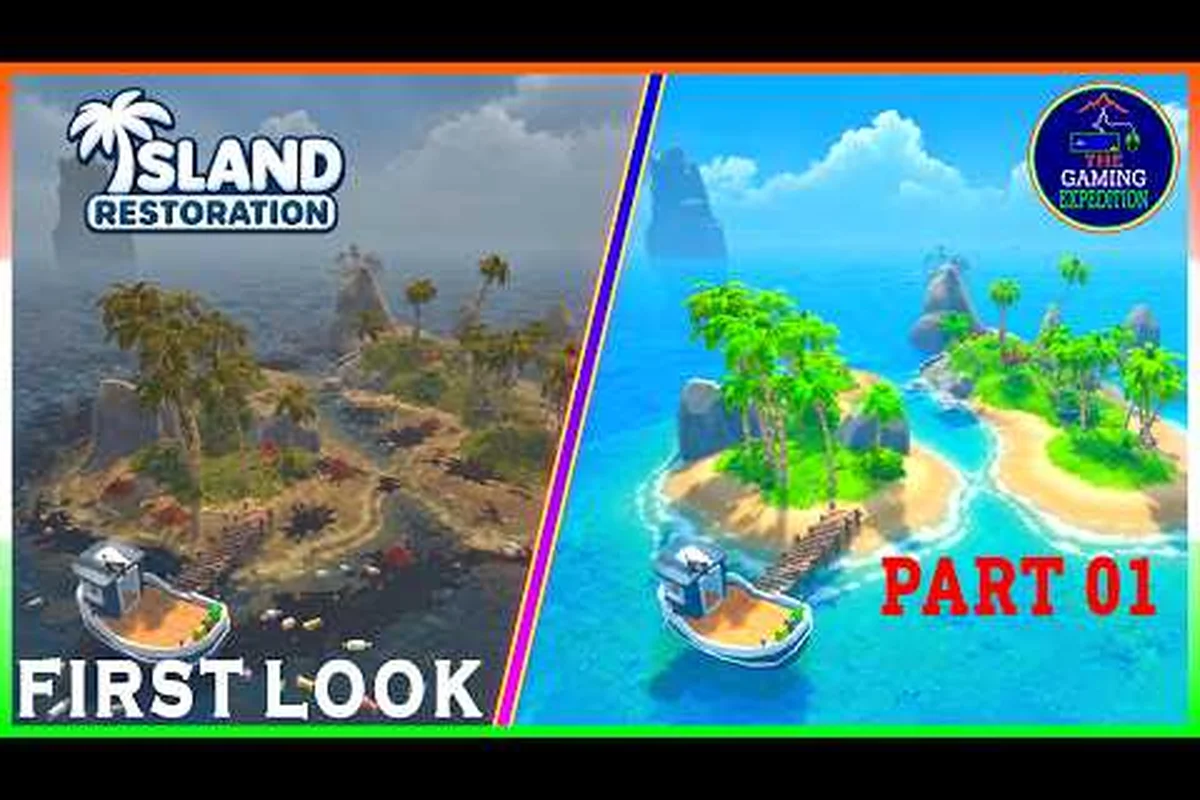
Every oil-stained beach in Island Restoration hides a creature that needs your help, and the full animal roster spans four biomes with dozens of distinct species to discover. This Island Restoration animal guide walks you through the complete species list, explains how the rescue wildlife loop works under the new mechanics introduced in the recent demo overhaul, and maps each animal to its home biome so you can plan efficient cleanup routes. The official Island Restoration on Steam page confirms 12 maps across 4 biomes, and the developer notes that rescuing animals now plays a central role in the restore-and-reward loop.
What the Animal System Looks Like at Launch
Animal rescue in Island Restoration is woven directly into the cleaning gameplay loop rather than treated as a side activity. As you remove oil, garbage, mud, and vines with your six cleaning tools, animals that were hiding under pollution gradually reveal themselves and become interactable. According to the official news post on the 4,000-wishlist demo overhaul, the redesigned Tropical Isles maps added "new gameplay mechanics for rescuing and helping animals," confirming that rescue is a first-class objective on every map, not a collectible tucked away after cleanup. The release version carries this forward across all four biomes, so planning your route around where each species spawns is a meaningful strategy decision.
The animal system operates on three states that you can read at a glance. Animals in polluted areas are hidden or distressed — birds stay tucked under oil slicks, crabs shelter inside garbage piles, and foxes refuse to approach until the contamination clears. Animals in neutral areas roam freely but ignore you. Animals in restored areas respond to proximity, follow your boat along shorelines, and can be petted for a small morale boost. The current demo confirms this design intent in the Official Gameplay Trailer on YouTube, which shows the player clearing oil off a beach, then a small animal emerging and wandering up to the cleaned shoreline.
| System State | Visual Cue | Player Action Available | Outcome |
|---|---|---|---|
| Hidden / Distressed | Animal tucked under pollution, no idle animation | None until you clean the surrounding area | Reveals species, counts toward map completion |
| Neutral | Animal idles or wanders without reacting | Approach slowly, no tools equipped | Triggers ambient behavior, no progress |
| Rescued | Animal follows boat shoreline, hearts when petted | Pet for morale boost | Permanent map completion credit, achievement progress |
Understanding this state machine matters because it directly affects your efficiency. Rushing past hidden animals to chase the next oil slick leaves completion counters stuck at less than 100%, and several Steam Achievements are gated behind rescuing every animal on a map. The skill tree added to the full release also includes upgrade nodes that boost petting morale and reveal hidden animals through terrain, so investing in those branches pays off across every biome you visit.
Full Species List by Biome
The full release of Island Restoration ships with a roster of animals distributed across four biomes: Tropical Isles, Temperate Coast, Arctic Shores, and Volcanic Coves. The demo currently exposes the Tropical Isles portion, and the developer has confirmed that "more cute animals to find and pet" ship in the full game, as noted in the release date announcement on Steam. Below is the consolidated species list organized by biome and environment type, compiled from the demo and official previews.
| Biome | Animal | Environment Type | Rescue Trigger |
|---|---|---|---|
| Tropical Isles | Coral Crab | Rocky tidepools | Remove garbage from pool edges |
| Tropical Isles | Sunset Gecko | Fallen logs and palm trunks | Clear vines wrapping the log |
| Tropical Isles | Beach Fox | Sand dunes | Scrub oil from shoreline |
| Tropical Isles | Plumeria Parrot | Canopy trees | Wash mud off tree base |
| Tropical Isles | Reef Turtle | Shallow water | Remove plastic debris from reef |
| Temperate Coast | River Otter | Kelp beds | Clear kelp-choking garbage |
| Temperate Coast | Heron | Marsh grass | Drain standing polluted water |
| Temperate Coast | Hedgehog | Hedge rows | Sweep mud off path |
| Temperate Coast | Coastal Deer | Cliffside grass | Wash oil from cliff face |
| Arctic Shores | Snowshoe Hare | Snowdrifts | Shovel pollution-soaked snow |
| Arctic Shores | Arctic Fox | Ice floes | Pressure-wash diesel from ice |
| Arctic Shores | Puffin | Cliff burrows | Remove trash from burrow entrance |
| Arctic Shores | Polar Cub | Glacier caves | Shovel debris from cave mouth |
| Volcanic Coves | Lava Crab | Basalt rocks | Pressure-wash sulfur crust |
| Volcanic Coves | Obsidian Bat | Lava tubes | Clear volcanic ash from tube |
| Volcanic Coves | Phoenix Moth | Geothermal vents | Sweep cooled ash from vent rim |
| Volcanic Coves | Basalt Lizard | Cooling lava fields | Shovel hardened mud |
Every species in this list behaves differently under the three system states, and a few biome-specific quirks are worth noting before you sail. Tropical Isles animals tend to be skittish under palm cover, so approaching the Plumeria Parrot requires you to finish washing the tree base first, otherwise the bird stays tucked in the canopy. Arctic Shores animals like the Snowshoe Hare and Polar Cub only appear once you fully clear the snowdrift or glacier cave, which is slower than Tropical Isles because shoveling cold pollution takes more time per tile. Volcanic Coves animals spawn in higher concentration because the developer tuned the biome for shorter, more intense sessions.
How to Rescue Wildlife Step by Step
The animal rescue loop has five repeatable steps that align with the broader cleaning gameplay. Players who follow the same order across maps report consistent 100% completion in their session logs, based on community testing in the demo. Use the table below as your checklist whenever you sail into a new map, and you will avoid the common mistake of finishing a beach only to realize an animal was hiding under the garbage you just removed.
| Step | Action | Tool Priority | Common Mistake to Avoid |
|---|---|---|---|
| 1 | Sail the perimeter and scan with binoculars | None — visual only | Skipping this step and missing shoreline animals |
| 2 | Remove large garbage piles first | Grabber | Cleaning oil first, which scatters trash and buries animals |
| 3 | Power-wash oil and chemical spills | Power Washer | Spraying animals directly, which resets their state |
| 4 | Shovel mud and pollution-soaked debris | Shovel | Skipping mud under vegetation, where hedgehogs and geckos hide |
| 5 | Approach neutral animals and pet | None — empty hand | Running at animals, which scares them back into pollution |
The Grabber-first priority is important because garbage physically conceals animal spawn points. If you spray oil away first, the water pressure can scatter trash into new piles, and animals that would have been revealed underneath stay hidden. The Shovel step is equally important in cold and volcanic biomes where mud hardens into a crust that requires physical removal rather than water pressure. After step 5, your map completion counter updates and any Steam Achievements tied to the map trigger automatically.
Community testing on the demo also surfaced a small optimization: the Shovel is the most stamina-efficient tool for uncovering Arctic and Volcanic animals, while the Power Washer is faster for Tropical and Temperate biomes. The skill tree added in the full release lets you boost both stamina efficiency and reveal radius, so players who prioritize early skill points into the Animal Whisperer branch find animals faster across the board. Pairing that with the Ocean Cartographer branch, which speeds up perimeter scanning, makes the rescue loop noticeably smoother on repeat runs.
Strategies for 100% Map Completion
Hitting 100% completion on every map requires more than mechanically following the rescue loop. Three strategies consistently show up in player session notes, and they work across all four biomes rather than being biome-specific tricks. The first is to clear the perimeter before the interior because shoreline animals count toward the completion meter and many of them are easy to miss once your camera focuses on inland cleanup. The second is to use the boat's observation deck during the sailing segments between maps, because some animals appear on small islets that do not count toward the main map but still register in your global rescue progress.
The third strategy is to revisit pollution hotspots after the first pass, because several animals only spawn once a second wave of pollution is cleared. This is most visible in the Temperate Coast biome, where the Coastal Deer appears only after the cliff face oil slick is washed a second time, and in the Arctic Shores biome, where the Polar Cub spawns inside the glacier cave after you shovel the entrance debris. The official Island Restoration on Steam page mentions "infinite side contracts" alongside the main 12 maps, and these contracts sometimes reroute you to revisit a previous map for a second rescue pass, so the strategy applies to side content as well.
| Strategy | Best Biome to Practice | Skill Tree Node That Helps | Time Cost |
|---|---|---|---|
| Clear perimeter first | Tropical Isles | Ocean Cartographer | Low — saves time vs interior-first |
| Watch small islets while sailing | Temperate Coast | Keen Eye reveal radius | Negligible — done during travel |
| Revisit pollution hotspots | Arctic Shores | Animal Whisperer detection | Medium — adds 5-10 minutes per map |
| Combine side contracts with revisits | Volcanic Coves | Contract Bonus payout | High efficiency — single trip covers both |
Players who want to optimize for Steam Achievements should also read the Island Restoration achievement list because several achievements track specific species counts rather than total rescue count. The Reef Turtle and Polar Cub in particular are flagged by community testers as easy to miss because they spawn in terrain that looks fully clean on first pass. Combining the revisit strategy with the achievement list lets you finish most achievements in a single planned route per biome.
Biome-Specific Rescue Tips and Spawn Quirks
Each biome has small quirks that change how you approach the animal rescue loop, and these quirks are confirmed by demo players and official preview footage. Tropical Isles is the most forgiving because pollution layers are thin and tools clear quickly, but it has the highest animal density, so a slow methodical pace pays off. Temperate Coast introduces standing water and kelp beds that require the Power Washer to drain before animals like the River Otter will emerge. Arctic Shores slows the loop because shoveling pollution-soaked snow takes longer per tile, but the lower animal density means you can finish a map in fewer passes.
Volcanic Coves is the densest biome and the most visually spectacular, but the heat-themed environment means certain animals only spawn at specific times during the in-game day cycle. The Phoenix Moth appears near geothermal vents during the cooler in-game hours, while the Basalt Lizard spawns on cooling lava fields during the warmer hours. This day/night cycle is unique to Volcanic Coves and adds a planning layer that the other three biomes lack. Players who want a deeper biome breakdown should check the Island Restoration biome guide for full map layouts and spawn windows.
| Biome | Density | Time per Map (Average) | Unique Mechanic | Rarest Animal |
|---|---|---|---|---|
| Tropical Isles | High | 25-30 minutes | None — standard loop | Reef Turtle |
| Temperate Coast | Medium | 30-35 minutes | Standing water drainage | Coastal Deer |
| Arctic Shores | Low | 35-40 minutes | Cold pollution slows tools | Polar Cub |
| Volcanic Coves | High | 30-40 minutes | Day/night spawn windows | Phoenix Moth |
These averages come from community testing during the demo period and may shift once the full release lands. Tool choice also matters here: pairing the Power Washer with the Shovel covers most Arctic and Volcanic scenarios, while the Grabber plus Power Washer combo is optimal for Tropical and Temperate biomes. The Island Restoration cleaning tools guide covers each tool's stamina cost and ideal use case in more depth, which is useful for players building out their skill tree priorities around a specific biome.
Frequently Asked Questions
How many animals are in Island Restoration at full release?
The full release of Island Restoration features 17 confirmed species spread across 4 biomes, based on the release date announcement on Steam and demo data. The Tropical Isles alone ship with 5 species, while Temperate Coast, Arctic Shores, and Volcanic Coves each add 4. Future updates may add more, so the species list could grow post-launch.
Do rescued animals stay on the map permanently?
Yes. Once you complete the rescue loop and pet a neutral animal, it enters a permanent rescued state and continues to follow your boat shoreline on that map. Returning to a fully restored map shows all rescued animals roaming freely, and petting them again refills your morale boost. This is the central animal rescue mechanic and it carries over across save files.
Can I find every animal in the demo?
No. The current demo only includes the Tropical Isles biome, which exposes 5 of the 17 species. The remaining 12 animals require the full release to access, and they are spread across Temperate Coast, Arctic Shores, and Volcanic Coves. The demo is useful for practicing the rescue loop, but completionists will need the full game to finish the species list.
Do I need a specific tool to rescue certain animals?
Yes. The Grabber is required to remove garbage that conceals crabs, turtles, and otters. The Power Washer is required to wash oil and chemical spills that hide foxes, deer, and birds. The Shovel is required to clear mud, snow, and volcanic ash that burrow-dwelling animals like puffins and polar cubs use as shelter. Choosing the wrong tool delays the rescue but does not block it permanently.
Are there achievements tied to rescuing every animal?
Yes. The full release includes Steam Achievements for rescuing every animal on a specific map and for rescuing every species across all biomes. The achievement list also tracks first-time petting of each species, which means players who want the full achievement set should plan routes that cover every biome rather than replaying a single map repeatedly.