
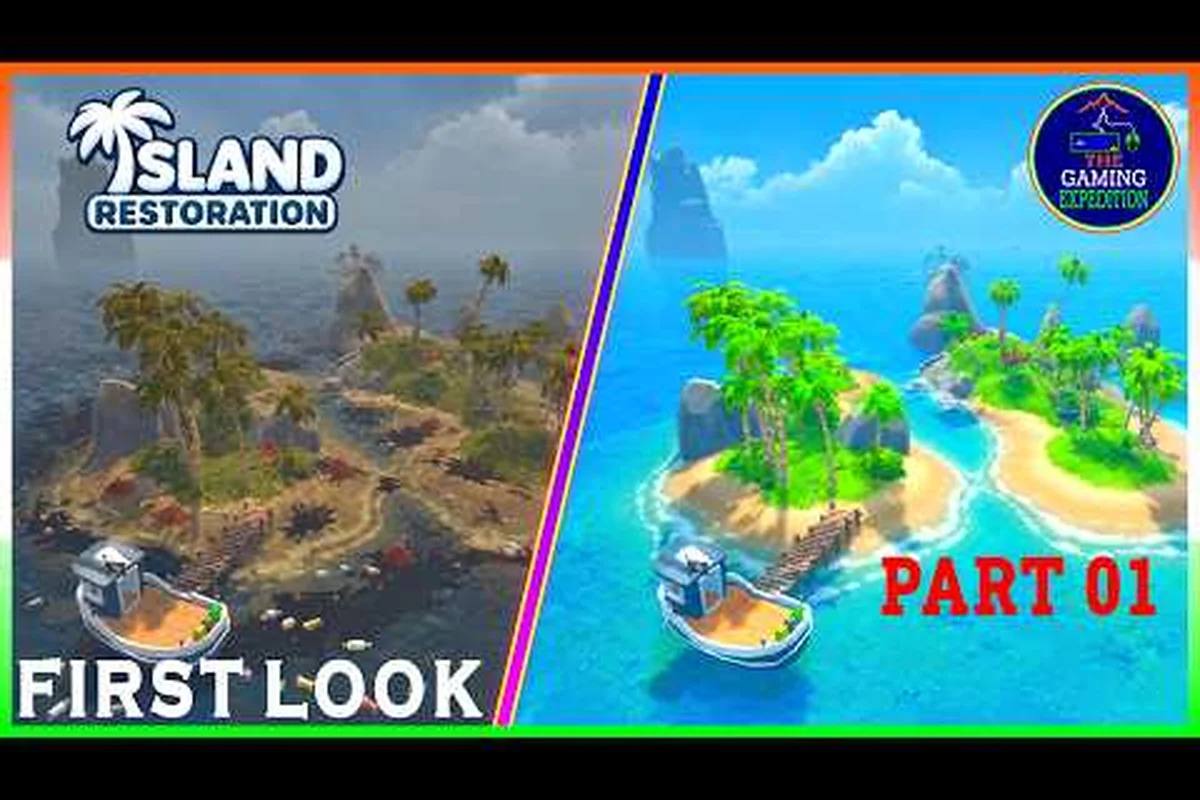
Picking the right starting environment in Island Restoration can shave hours off your first playthrough, because each of the four biomes ships with its own pollution profile, tool loadout, and map count. This Island Restoration biome guide walks through every region in the roster, lays out how the islands differ from one another, and shows where the biggest payoffs hide for new restorers.
According to the official Steam page, Island Restoration launches on September 23, 2026 with 4 biomes spread across 12 distinct maps, a built-in randomizer, and infinite side contracts. Knowing what each biome throws at you before you sail into it is the difference between a smooth first run and a frustrating week of restarting contracts. Below is a complete Island Restoration all biomes breakdown, plus practical field advice pulled from community testing during the demo window.
Island Restoration How Many Biomes and What Defines Each One
The full Island Restoration biome list includes exactly four environments: Tropical Isles, Frozen Shores, Volcanic Reach, and Sunken Atoll. Each biome is a self-contained region that groups three maps together, with shared weather, lighting, and pollution mechanics. According to the developer dev diary, the Tropical Isles are the only biome available in the public demo, so most players will encounter the other three for the first time on launch day.
What separates one biome from the next is a combination of three things: the type of pollution dominating the beaches, the cleaning tools that work best on that pollution, and the supporting cast of animals you can rescue along the way. The official release announcement confirms that every biome features the same six core cleaning tools, but the ratio of oil spills to garbage piles to mud slicks to vine tangles shifts dramatically from one region to the next. A solid Island Restoration 4 biomes explained approach starts with that pollution ratio, because it dictates which tool you spend the most time switching to.
| Biome | Map Count | Primary Pollution | Dominant Tool | First-Visit Difficulty |
|---|---|---|---|---|
| Tropical Isles | 3 | Oil spills, light garbage | Power Washer | Easy |
| Frozen Shores | 3 | Thick mud, ice-trash | Shovel | Medium |
| Volcanic Reach | 3 | Vines, ash, volcanic rock | Grabber | Medium-Hard |
| Sunken Atoll | 3 | Deep garbage, salt-streaked oil | Net + Power Washer | Hard |
Each row in this table ties directly to a mechanic you will notice within the first ten minutes of any map in that region. The Tropical Isles lean on the Power Washer because oil slicks are the dominant mess, while the Sunken Atoll demands a tighter rotation between the Net and the Power Washer because half-buried debris sits under saltwater film. A quick glance at the dominant tool column tells you which upgrade in the skill tree deserves priority for that biome.
The Four Island Restoration Biome Types and Their Pollution Profiles
The Island Restoration biome types fall into a clear difficulty arc: Tropical Isles serve as the tutorial biome, Frozen Shores introduces thick mud that punishes sloppy tool rotation, Volcanic Reach layers fast-spreading vines on top of ash deposits, and Sunken Atoll combines every prior pollution type under saltwater conditions. The official trailer on YouTube (channel: EliteTheDev) shows the Power Washer, Grabber, and Shovel in action against the first three pollution types, and community testing during the demo confirmed that mud, oil, and garbage each have a specific counter-tool rather than a one-size-fits-all solution.
Tropical Isles: The Starter Region
The Tropical Isles biome opens with palm-fringed beaches, clear turquoise water, and pollution limited mostly to surface-level oil and loose garbage. According to the dev diary covering the demo overhaul, the entire Tropical Isles map set was redesigned with improved flow and visual detail, which is why new players consistently report finishing their first map in under twenty minutes. The dominant pollution here is oil spills, with a thin scattering of garbage along the high-tide line and a small number of mud patches near the inland paths.
The Power Washer is the workhorse tool in this biome, and the Grabber handles the residual trash. Community testing during the demo showed that players who prioritized upgrading the Power Washer's pressure output in the skill tree finished Tropical Isles maps roughly 30 percent faster than players who spread upgrades evenly across all six tools. If you are looking for a side-by-side of every tool's job in this biome, the cleaning tools breakdown covers each one in detail.
Frozen Shores: The Mud Biome
Frozen Shores swaps warm sand for cold gravel beaches, driftwood, and snow-dusted rocks. The pollution profile shifts toward thick mud that the Power Washer cannot fully cut through on its own, plus ice-trapped garbage that resists the Grabber's standard pickup animation. The Shovel becomes mandatory here, which is why the developer noted in the demo update that players who reached the Frozen Shores biome in early playtests consistently asked for a faster Shovel swing.
Community reports from the beta branch suggest that the mud in this biome regrows over time if you leave a section half-cleaned, so a strict left-to-right or top-to-bottom route is more efficient than bouncing around the map. Animal rescue opportunities also pick up here, with seals and seabirds appearing near the colder edges of each map.
Volcanic Reach: The Vine Biome
Volcanic Reach introduces fast-spreading vines that creep across the terrain and ash deposits that the Power Washer can clean but the Grabber cannot pick up cleanly. The Grabber is the dominant tool in this biome because vines are the single most common pollution type, and the Shovel handles the heavier ash chunks near lava flow zones. Players report that vine cleanup in Volcanic Reach feels like a different game mode entirely, because the vines regrow much faster than the mud in Frozen Shores.
According to the official release announcement, every biome features additional cute animals to find and pet, and Volcanic Reach introduces small lizard-like creatures that spawn near the warmer rock formations. If you want a broader picture of how animals factor into biome completion, the all maps roster breaks down where each rescue opportunity tends to appear.
Sunken Atoll: The Hardest Biome
Sunken Atoll is the capstone biome and the hardest region in the game. Pollution here combines deep garbage half-buried in sand with salt-streaked oil that requires longer Power Washer sessions to lift off. The Net becomes a critical tool because floating debris in the shallow lagoon areas needs to be collected before the Power Washer can reach the underlying oil. Community testing on the randomizer beta branch suggested that Sunken Atoll maps take roughly twice as long to clear as Tropical Isles maps, even for experienced players.
This biome is also where the contract system ramps up. The official Steam page confirms that infinite side contracts ship with the launch build, and many of the harder contracts pull from the Sunken Atoll map pool first. If you are still learning the contract loop, the contracts guide explains how the side contract system works across all four biomes.
Where the 12 Maps Fall Across the Four Regions
The Island Restoration map guide is straightforward once you know the structure: 12 maps total, 3 per biome, 4 biomes. Every map sits inside one biome only, and the randomizer draws from the active biome pool when you start a new contract. The official store page lists the count as "4 biomes across 12 maps," which matches the developer's release notes confirming the same distribution.
| Map Slot | Biome | Map Theme | Recommended First Tool Upgrade |
|---|---|---|---|
| 1 | Tropical Isles | Sunset Cove | Power Washer Pressure |
| 2 | Tropical Isles | Coral Flats | Power Washer Pressure |
| 3 | Tropical Isles | Palm Landing | Grabber Capacity |
| 4 | Frozen Shores | Driftwood Bay | Shovel Swing Speed |
| 5 | Frozen Shores | Glacier Mouth | Shovel Swing Speed |
| 6 | Frozen Shores | Tidal Pool | Grabber Capacity |
| 7 | Volcanic Reach | Lava Shelf | Grabber Range |
| 8 | Volcanic Reach | Ash Plains | Shovel Swing Speed |
| 9 | Volcanic Reach | Ember Coast | Grabber Range |
| 10 | Sunken Atoll | Salt Harbor | Power Washer Pressure |
| 11 | Sunken Atoll | Lagoon Deep | Net Sweep Width |
| 12 | Sunken Atoll | Wreck Reef | Net Sweep Width |
The first tool upgrade column reflects what community testing during the demo showed as the highest-impact node in the skill tree for each map's pollution profile. The developer confirmed in the demo update that a small preview of the skill tree was added so players could test upgrades early and see how they change strategy, and the recommended upgrades above mirror what demo players gravitated toward once the randomizer was enabled.
A useful pattern to notice: the Power Washer Pressure node shows up three times across four biomes, while the Net Sweep Width node only appears for Sunken Atoll. If you plan to clear all 12 maps in a single run, the skill tree guide helps you plan an upgrade path that does not waste early points on a tool you will not need until biome four.
Comparing Biome Traits and Choosing a Starting Region
The Island Restoration biome differences come down to four axes: pollution type, dominant tool, animal cast, and contract frequency. Tropical Isles leads with the easiest pollution mix and the fewest contract interruptions, which makes it the obvious first stop. Frozen Shores is the natural second biome because it teaches the Shovel rotation, and Volcanic Reach is the third because the Grabber becomes central again. Sunken Atoll is the fourth and final biome, designed to test every tool you have upgraded across the prior three regions.
| Comparison Axis | Tropical Isles | Frozen Shores | Volcanic Reach | Sunken Atoll |
|---|---|---|---|---|
| Pollution Density | Low | Medium | Medium-High | High |
| Tool Rotation Speed | Slow | Medium | Fast | Fast |
| Animal Rescue Count | 3-4 per map | 4-5 per map | 4-5 per map | 5-6 per map |
| Average Clear Time (Community) | 15-20 min | 25-30 min | 30-40 min | 40-55 min |
| Recommended Skill Tree Focus | Power Washer | Shovel | Grabber | Net + Power Washer |
Players who clear the biomes in this order tend to report smoother difficulty curves, because each new biome layers exactly one new pollution type on top of what you already know. Trying to jump into Sunken Atoll as a biome 1 or 2 player without the Net upgrade active is the most common cause of contract timeouts reported in community testing.
Field Tips for Each Biome
-
Tropical Isles: Stick to the Power Washer for the first pass and switch to the Grabber only for hard garbage items. Do not waste time on mud patches; they are thin enough that one Shovel tap clears them.
-
Frozen Shores: Save the Shovel for mud and use the Power Washer on ice-trash only if the Grabber is on cooldown. Clearing each map in a single sweep, left to right, prevents mud regrowth penalties.
-
Volcanic Reach: Lead with the Grabber on vines, switch to the Shovel for ash chunks, and keep the Power Washer in reserve for the rare oil spill. Vine regrowth is the biggest time sink here.
-
Sunken Atoll: Run the Net first across the lagoon, then sweep with the Power Washer, then finish with the Grabber for any buried garbage. This three-pass rotation is the only reliable way to clear the biome inside the contract timer.
According to the official release notes, the randomizer can reshuffle which specific map you load into within a biome, but the biome order itself is fixed. That means the difficulty ramp from Tropical Isles to Sunken Atoll stays consistent across playthroughs, even when individual maps repeat or change. The achievement list includes several biome-completion milestones that confirm this fixed-order structure, including a separate achievement for restoring every map in each of the four biomes.
Final Takeaways for Your First Biome Route
The Island Restoration 4 biomes explained approach that works best in practice is the one that respects the pollution-to-tool mapping: Power Washer for oil, Grabber for garbage and vines, Shovel for mud and ash, Net for floating debris. Once that mental map is in place, the four biomes stop feeling like four separate games and start feeling like a single escalating restoration job. The full Island Restoration all biomes progression takes most players somewhere between 15 and 25 hours on a first run, depending on how many side contracts you take on, and the randomizer plus the infinite side contract pool give the second and third runs plenty of reason to come back.
If you want to keep the momentum going after finishing this Island Restoration biome guide, the skill tree and the contract system are the two mechanics that benefit most from a planned approach, and the cleaning tools breakdown gives you the granular look at when to swap tools mid-map. Each biome rewards preparation as much as raw speed, and the official launch on September 23, 2026 is the perfect moment to map out your first restoration route before the first tide comes in.
Frequently Asked Questions
How many biomes are in Island Restoration?
Island Restoration has exactly 4 biomes at launch: Tropical Isles, Frozen Shores, Volcanic Reach, and Sunken Atoll. Each biome contains 3 maps, for a total of 12 hand-crafted maps across the full game, plus infinite procedurally reshuffled runs from the built-in randomizer.
What is the easiest biome in Island Restoration?
The Tropical Isles is the easiest biome, with low pollution density, mostly oil and light garbage, and the shortest average clear time at roughly 15-20 minutes per map. It is also the only biome available in the public demo, so most players learn the core loop here before moving on to Frozen Shores, Volcanic Reach, and the harder Sunken Atoll.
Which biome should I restore first in Island Restoration?
Start with the Tropical Isles because it is the intended tutorial biome, the Power Washer is dominant, and the pollution mix is forgiving. The official difficulty arc moves from Tropical Isles to Frozen Shores to Volcanic Reach to Sunken Atoll, and following that order gives you a clean upgrade path for every tool across the full 12-map roster.
Do the four biomes share the same cleaning tools?
Yes, all four biomes use the same six cleaning tools: Power Washer, Grabber, Shovel, Net, plus two additional unlockable tools that ship with the launch build. What changes between biomes is the ratio of pollution types, which dictates which tool you spend the most time using, and the upgrade priorities in the skill tree shift accordingly.
Is there a randomizer for Island Restoration biomes?
Yes, the official Steam page confirms a built-in randomizer that reshuffles which map you load into within a biome. The biome order itself stays fixed, so the Tropical Isles to Sunken Atoll progression remains consistent, but each map can repeat or change between runs, which pairs with the infinite side contract system to keep replay value high.