
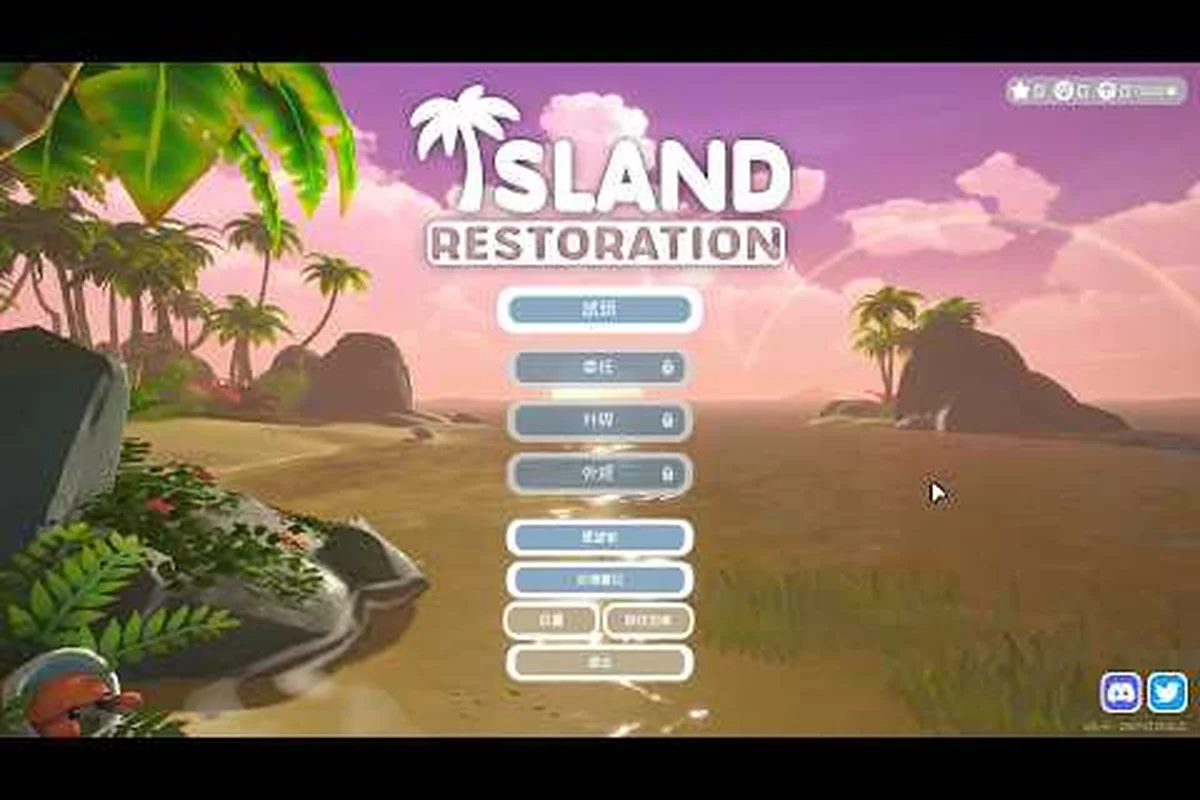
Island Restoration tool mechanics, explained simply: every one of the 6 cleaning tools was built for a specific mess, and this guide breaks down each tool's swing speed, recovery, hidden variables, and the satisfying feel that makes the roster fun to master. According to the Steam page, the full release ships with 6 unlockable cleaning tools across 4 biomes and 12 maps, and knowing which implement answers each pollution type is the single biggest lever for raw cleaning speed. Whether you need the Grabber's rhythm or the Power Washer's water-tank pressure curve, this guide covers it all.
What Every Cleaning Tool Actually Does on a Damaged Island
Cleaning speed in Island Restoration comes down to one thing — matching the right tool to the right mess. The game ships with 6 distinct cleaning tools, each tuned for a specific pollution type: oil slicks, scattered trash, tangled vines, caked mud, sap residue, and rusted metal. Every tool has its own swing arc, area of effect, stamina drain, and, crucially, a different feel when you watch the pollution disappear. Some are punchy and loud, others are quiet and meditative, and the developers clearly tuned that contrast on purpose.
According to the Island Restoration Steam page, the full release adds 6 unlockable cleaning tools spread across 4 biomes and 12 maps, alongside a complete upgrade skill tree. That tool count is a deliberate design choice: each mess type has exactly one "best" answer, and part of the satisfaction loop is learning which tool reaches for which spill.
This guide breaks down Island Restoration tool mechanics, walks through every entry in the 6-tool roster, and explains the subtle differences in swing feel that separate a quick beach sweep from a long, oddly therapeutic cleanup. By the end, you should be able to glance at any pollution patch and know — without checking the hotbar — which cleaning tool belongs in your hand.
Core Tool Mechanics and the Cleaning Speed Pipeline
Every tool in Island Restoration runs on the same underlying pipeline: Detection → Equip → Swing → Recovery → Refill (if applicable). Understanding that pipeline is the foundation of Island Restoration tool mechanics because most of the small frustrations players report (slow beaches, stuck tools, half-finished sections) trace back to one of these five steps breaking down.
The pipeline looks deceptively simple, but each stage has a hidden variable the game doesn't surface in plain UI text — for example, the Swing stage secretly rolls 1–4 damage ticks per animation depending on which of the six tools you equip, and the Refill stage silently zeros out your Power Washer's PSI when the water tank empties mid-beach, both of which can halve your effective cleaning speed without any on-screen warning.
| Pipeline Stage | What Happens | Hidden Variable | Impact on Cleaning Speed |
|---|---|---|---|
| Detection | Aim reticle highlights a pollutable surface | Surface type + tool match | Wrong tool = 0% progress |
| Equip | Tool leaves the hotbar, enters the active hand | None | Negligible |
| Swing | The tool performs its animation and removes pollution | Damage tick count per swing | 1–4 ticks per swing depending on tool |
| Recovery | Brief animation before you can swing again | Recovery frames | Lower = higher DPS-feel |
| Refill | Power Washer refills from the water tank | Tank capacity | Empty tank = 0 pressure = 0 cleaning speed |
Detection and the "Right Tool" Feedback
When you point a tool at the wrong mess type, the reticle shifts to a faint red and the swing does nothing. This is the most common reason new players report feeling like cleaning speed is "low" — they're swinging a Shovel at a Power Washer oil slick. The actual top speed of the tool never changes; the input is just being ignored.
The dev diary from EliteTheDev confirms that the official gameplay trailer shows the Grabber picking up scattered trash alongside the Power Washer stripping oil from a beach — a deliberate pairing that hints at the design intent: each tool is the only clean answer for its mess.
Refill Pressure and the Water Tank
Only the Power Washer has a finite resource — water in the Water Tank mounted on your boat. Tank capacity scales with skill tree upgrades, but at base level a fully-pressurized stream cleans roughly one medium oil patch before you feel the pressure dip. Players who treat refill stops as part of the cleanup rhythm report a noticeably higher overall Island Restoration cleaning speed than those who try to brute-force through every spill in one stretch.
Complete Tool Roster and Roles
Before diving into individual feel, here is the full roster. The table below covers every entry in the Island Restoration 6 tools lineup, what each one cleans, and the rough role it plays across the 12 maps — including which biome debuts the tool (Tropical Isles as the demo baseline, then Coastal Cliffs and Frozen Fjords introducing the precision tier entries) and whether it handles soft mess like sap with the Sap Scraper or hard mess like rusted hull plating with the Rust Eraser, so you can match the right Grabber, Power Washer, Shovel, Cutters, Sap Scraper, or Rust Eraser to the spill in front of you.
| # | Tool | Primary Mess | Biome Debut | Role |
|---|---|---|---|---|
| 1 | Grabber | Loose trash, plastic, bottles | Tropical Isles (Demo) | Universal pickup, animal rescue |
| 2 | Power Washer | Oil slicks, sticky residue | Tropical Isles (Demo) | High-pressure area denial |
| 3 | Shovel | Mud, caked sediment, sand piles | Tropical Isles (Demo) | Heavy lifting, terrain reshape |
| 4 | Cutters | Vines, overgrowth, root tangles | Tropical Isles (Demo) | Line-of-sight restore |
| 5 | Sap Scraper | Tree sap, sticky bark patches | Coastal Cliffs (Release) | Precision detail work |
| 6 | Rust Eraser | Rusted metal debris, oxidized boat parts | Frozen Fjords (Release) | Late-game hard mess removal |
This is the complete roster of Island Restoration 6 tools. Every other cleaning implement you see in your hotbar is one of these six, just at a different upgrade tier. The Island Restoration cleaning tools guide goes deeper into which tool you should keep active on each biome, but the cheat sheet above tells you exactly which entry to reach for.
Tool-by-Tool Breakdown: Feel, Speed, and Best Use
Each tool feels different in the hand, and that is by design. The developers tuned the swing animation, sound design, and particle effects so that the satisfying cleaning tools experience is not just about watching pollution disappear — it's about how that disappearance lands in your senses.
Grabber — The Universal Reach
The Grabber is the tool you spend the most total time with. It is a long-handled pickup stick designed for loose trash: plastic bottles, broken crates, washed-up netting, and the small objects you spot while walking the perimeter of a polluted beach. Its swing is a single click-and-release, with no recovery frames to speak of, which gives it the highest theoretical clicks-per-minute of any tool in the game.
What makes the Grabber stand out for satisfying cleanup is the pop animation. Every successful pickup plays a tiny release burst as the trash leaves the ground and lands in your collection bag. Players who chase the rhythm of clean sweeps report that this is the single most repeatable satisfying moment in the game.
| Attribute | Base Value | Notes |
|---|---|---|
| Damage per swing | 1 pickup | One item per click |
| Recovery frames | 0 | Fastest swing in the game |
| Best mess type | Loose trash | Cannot interact with oil, mud, or vines |
| Unlock biome | Tropical Isles (Demo) | Available from island 1 |
The Grabber also doubles as your animal rescue tool. When a small creature is trapped under debris, the Grabber is the only implement that can free it without harming the animal. This dual role is part of why it never leaves the hotbar, even on late-game biomes.
High-Pressure Stream and Wide Arc Feel
The Power Washer is the headline tool in every Island Restoration trailer, and for good reason. It strips oil slicks off rocks, sand, and hull surfaces in a wide arc, and the cleanup is loud, immediate, and visually dramatic. Steam and dislodged grime burst outward with every sweep, and the difference between a high-pressure stream and a low-pressure dribble is obvious to the player instantly.
| Attribute | Base Value | Notes |
|---|---|---|
| Area of effect | Wide cone | Covers roughly 2 m of beach per pass |
| Damage per swing | Continuous | Tick-based, not click-based |
| Recovery frames | Short | Slightly slower than Grabber |
| Best mess type | Oil, sticky residue | Useless against trash and vines |
| Resource | Water Tank | Must refill at boat |
Refill pressure is the key variable here. A full tank feels like a firehose; a half-empty tank feels like a garden sprinkler; an empty tank is a plastic toy. This is where the Island Restoration water tank and refill timing guide becomes essential reading, because optimizing refill stops is the single biggest lever for Island Restoration cleaning speed when working the Power Washer.
Shovel — The Heavy Lifter
The Shovel is built for caked mud, sediment piles, and the thick sludge that gathers in low-lying areas of an island. Its swing is slow and heavy, with a noticeable wind-up animation that gives every dig a deliberate, almost agricultural feel. The cleanup payoff is the thunk of compacted mud breaking apart, followed by a clean patch of restored sand.
| Attribute | Base Value | Notes |
|---|---|---|
| Damage per swing | 2–4 ticks | Multi-hit per swing on loose sediment |
| Recovery frames | Long | Slowest swing in the game |
| Best mess type | Mud, caked sediment | Cannot remove oil or trash |
| Unlock biome | Tropical Isles (Demo) | Available from island 1 |
The Shovel's slower swing is offset by its multi-hit nature. On a packed mud pile, one swing removes a chunk that would take three or four Grabber clicks. In practice, Shovel-on-mud is the most time-efficient action in the base 6-tool roster, which is why veteran players save the Shovel for mud-heavy maps and keep lighter tools ready for the rest.
Cutters — The Line-of-Sight Restorer
Cutters handle vines, overgrowth, and the tangled root mats that block your path between pollution patches. Unlike the other tools, Cutters reward forward movement more than they reward aiming — you slice as you walk, and the cleanup is a clean crack-shhh sound as vines fall away to reveal the beach underneath.
| Attribute | Base Value | Notes |
|---|---|---|
| Damage per swing | 1 slice | One vine section per click |
| Recovery frames | Short | Fast slice animation |
| Best mess type | Vines, overgrowth | Useless against mud, oil, or trash |
| Unlock biome | Tropical Isles (Demo) | Available from island 1 |
Cutters do not directly clean a pollution "spot" the way the Power Washer cleans an oil slick. Instead, they restore access to spots that vines have hidden. This is the tool most likely to be underused by new players, who swing at the obvious surface mess and never realize the vine curtain was hiding a second oil patch behind it. The Island Restoration grabber how to use breakdown of basic tool logic covers this access-vs-cleanup distinction in more detail.
Sap Scraper — The Precision Detail Tool
The Sap Scraper is the first release-only tool, debuting in the Coastal Cliffs biome. It is a small, flat-edged blade designed to peel sticky tree sap off bark and rock surfaces without damaging the underlying material. Its swing is a careful, short scrape — closer to a knife motion than a tool swing — and the cleanup is the satisfying visual of clear sap rolling off in a single curled ribbon.
| Attribute | Base Value | Notes |
|---|---|---|
| Damage per swing | 1–2 ticks | Slower than Shovel per area |
| Recovery frames | Medium | Mid-range swing speed |
| Best mess type | Tree sap, sticky bark | Precision tool, not area denial |
| Unlock biome | Coastal Cliffs (Release) | First new biome after demo |
Sap Scrapers reward careful aim over area coverage. Rushing through a sap section is the fastest way to miss a sticky patch and have to backtrack. Players who slow down and treat each sap node as a deliberate stroke report that this is one of the most satisfying cleaning tools in the entire roster, on par with the Grabber's pickup pops.
Rust Eraser — The Late-Game Heavy Hitter
The Rust Eraser is the last tool unlocked, found in the Frozen Fjords biome. It is a powered rotary brush designed to grind rust off metal debris — old boat parts, corroded pipes, and the rusted wreckage that litters the hardest maps. Its swing is a sustained vibration, with a low mechanical hum and a stream of rust flakes flying off the target surface.
| Attribute | Base Value | Notes |
|---|---|---|
| Damage per swing | Continuous | Similar tick model to Power Washer |
| Recovery frames | Medium | Cannot spam |
| Best mess type | Rusted metal, oxidized boat parts | No effect on organic messes |
| Unlock biome | Frozen Fjords (Release) | Last biome in progression |
The Rust Eraser shares the Power Washer's pressure-tick model but does not use the water tank. Instead, it uses a battery that drains over time and recharges when you return to the boat. This makes it more forgiving than the Power Washer for long cleanup stretches, but the cleanup is also more visually muted — rust flakes versus steam gouts. The trade-off is intentional: the developers tuned the Rust Eraser to feel heavy and industrial, matching the colder, harder biomes it lives in.
Satisfying Cleanup Feel: Why Each Tool Feels Different
The single biggest thing the developers got right with the 6-tool roster is audio-visual differentiation. Every tool has a distinct sound, a distinct particle effect, and a distinct feel in the hand. This is what turns a basic cleanup loop into one of the most satisfying cleaning tools experiences in the cozy sim genre.
| Tool | Sound Profile | Particle Effect | Feel |
|---|---|---|---|
| Grabber | Light pop | Tiny burst on pickup | Snappy, rhythmic |
| Power Washer | Hiss-roar | Steam and dislodged grime | Loud, dramatic |
| Shovel | Heavy thunk | Dust and sediment plume | Weighty, deliberate |
| Cutters | Crack and slice | Falling vine debris | Crisp, clean |
| Sap Scraper | Soft scrape-peel | Curling sap ribbon | Meditative, precise |
| Rust Eraser | Low mechanical hum | Rust flake shower | Industrial, sustained |
Players chasing the "satisfying cleanup" loop tend to gravitate toward one or two tools that match their personal preference. Some prefer the Grabber's rhythm — fast, repeatable, almost ASMR. Others prefer the Power Washer's dramatic steam bursts. The fact that the roster offers every cleanup style is a deliberate part of the design, and it is one of the reasons the game crossed 4,000 wishlists before launch according to the official demo overhaul news post.
The Skill Tree and Tool Upgrades
Every tool in the roster has a parallel upgrade path in the skill tree, and the demo shipped a small preview of that system for players to test early. Skill tree nodes affect damage per swing, recovery frames, tank capacity, and even a small unlock-order tweak that lets you reach a particular tool one biome earlier than the default progression.
The full skill tree is one of the headline features of the September 23, 2026 release, alongside the 4 biomes, 12 maps, and the built-in randomizer. Players who plan their early skill points around their favorite tool — for example, maxing out the Grabber's pickup speed first — report feeling the difference in raw Island Restoration cleaning speed within the first hour. The Island Restoration speed upgrade path guide breaks down the recommended order for early skill points.
Cleaning Speed Comparison: How the 6 Tools Stack Up
Cleaning speed is the metric every player cares about, but it is also the metric most likely to be misunderstood. A "fast" tool is not the same as an "efficient" tool, and the difference matters when you are working through a long map with a finite play session.
| Tool | Pure Swing Speed | Effective Area Speed | Best-Use Speed | Resource Cost |
|---|---|---|---|---|
| Grabber | Fastest | Medium (1 item per click) | High on trash-dense maps | None |
| Power Washer | Medium | Fastest (wide cone) | High on oil-heavy maps | Water Tank |
| Shovel | Slowest | Fast on packed mud | High on mud-heavy maps | None |
| Cutters | Fast | Medium (1 slice per click) | High on vine-heavy maps | None |
| Sap Scraper | Medium | Slow (precision) | High on sap-heavy maps | None |
| Rust Eraser | Medium | Fast on rusted metal | High on metal-heavy maps | Battery |
The table above is not a tier list — it is a situational ranking. The Power Washer dominates oil-heavy maps, the Shovel dominates mud-heavy maps, and the Grabber is the universal workhorse for everything in between. Players who try to force a single tool across every mess type are the ones who report the lowest perceived cleaning speed, even when their individual swing stats are technically competitive.
Why "Satisfying" and "Fast" Are Different Metrics
A common misconception is that the fastest-cleaning tool is also the most satisfying. In practice, the opposite is often true. The Shovel clears mud the fastest, but its slow swing animation means you spend more time waiting per action, which can feel less satisfying than the Grabber's rapid pickup loop. Conversely, the Sap Scraper is one of the slowest tools per area, but its meditative scrape motion is one of the most replayed clips in community showcases.
This is the core design lesson of the 6-tool roster: speed and satisfaction are not the same axis. Players who optimize only for speed end up grinding with the Shovel; players who optimize for the cleanup feel they enjoy end up with a balanced tool rotation that feels both productive and pleasant.
Practical Tips for Working the 6-Tool Roster
Below is a short tactical checklist for getting the most out of every tool in the lineup. These tips are drawn from community testing and the official demo launch diary previewing the original tool rotation.
-
Match first, swing second. A red reticle is a wasted swing. Glance at the pollution type before you click.
-
Refill before you run dry. Empty Water Tank means zero cleaning speed on the Power Washer, and a half-empty tank cuts pressure noticeably.
-
Cut vines before oil. Vine curtains hide oil slicks. Clearing line-of-sight first often doubles your effective cleanup speed.
-
Save the Shovel for mud. Spamming the Shovel on light sediment wastes its multi-hit potential. Reserve it for packed piles.
-
Use the Grabber between heavy swings. The Grabber has zero recovery frames, which makes it a great "filler" tool between Shovel digs and Power Washer refills.
-
Plan skill points around your favorite tool first. The skill tree is one of the headline release features, and early points in your preferred tool make the biggest perceived difference in Island Restoration cleaning speed.
That walkthrough translates the per-tool tips above into a sequenced cleanup route — which Vine Curtain to clear first, when to swap the Grabber in to recycle Light Debris mid-swing, and where to break for the Water Tank refill on a multi-island run so the Power Washer's pressure curve never collapses mid-strip.
Final Thought on the 6-Tool Loop
The 6-tool roster is small enough to learn in an afternoon and deep enough to reward dozens of hours of optimization. Every tool has a clear identity, a clear best-use case, and a clear "feel" that makes the cleanup loop genuinely satisfying rather than repetitive. That combination — clarity plus depth — is the heart of Island Restoration tool mechanics, and it is the reason the game has attracted 4,000 wishlists and a steadily growing community ahead of the September 23, 2026 release at $9.99 with a 10% launch discount for the first two weeks.
A player who gravitates toward the grabber's satisfying clamp-and-release will naturally invest skill points in reach upgrades and refill tokens that keep it cycling, while someone who prefers the sweep of the wide mop will prioritize stamina and area-coverage nodes instead — the skill tree isn't optimized in a vacuum, it's shaped by which of the 6 tools feels best in your hands, and that personal preference is what makes one cleanup loop run at peak island restoration cleaning speed while another stalls.
Frequently Asked Questions
How many cleaning tools are in Island Restoration at launch?
There are 6 cleaning tools in Island Restoration at full launch: Grabber, Power Washer, Shovel, Cutters, Sap Scraper, and Rust Eraser. The first four debut in the Tropical Isles demo, and the Sap Scraper and Rust Eraser unlock in the Coastal Cliffs and Frozen Fjords biomes respectively, as confirmed on the Island Restoration Steam page.
Which tool has the highest cleaning speed on oil slicks?
The Power Washer is the only tool that cleans oil slicks, so it has the highest effective cleaning speed on that mess type by default. A full Water Tank and pressure-focused skill tree nodes push its area-of-effect coverage to roughly 2 m of beach per pass, making it the headline cleanup tool for oil-heavy maps.
Is the Grabber useful on late-game biomes?
Yes. The Grabber remains the universal pickup tool throughout all 4 biomes and is also the only implement that can safely free animals trapped under debris. Its zero-recovery-frame swing makes it a fast filler action between heavy swings from slower tools, even on the Frozen Fjords map set.
Does the Rust Eraser use the Water Tank?
No. The Rust Eraser uses a battery that drains over time and recharges at the boat, similar to but separate from the Water Tank that powers the Power Washer. This separation lets you run both tools in parallel without resource contention during long cleanup sessions on rusted-metal maps.
What is the fastest way to improve cleaning speed early?
The fastest early-game lever is putting your first skill tree points into your preferred tool's damage or recovery nodes, then building a refill rhythm around the Power Washer's Water Tank. Players who optimize refill timing and skill order report noticeably higher Island Restoration cleaning speed within the first hour of a new save.